
One property, more than one person
Why does a property show another person’s name?
A name search may show the person you searched for without making another reported person obvious. Search the property ID or read the claim form before deciding who should claim.
Next tip: missing documents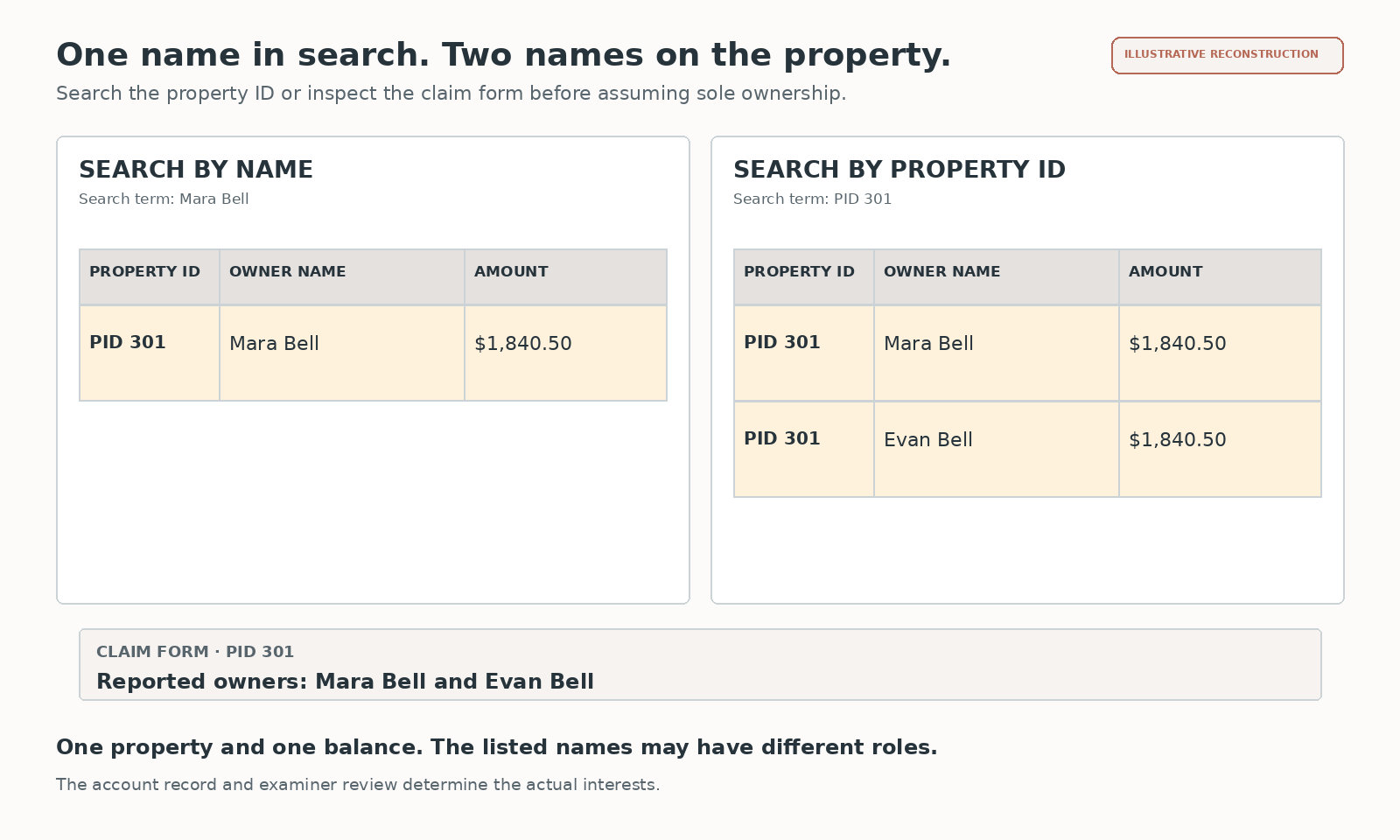
Two names do not prove a 50/50 split
In this fictional example, searching Mara Bell shows PID 301 with a $1,840.50 balance. Searching PID 301 reveals Mara and Evan Bell. That is one property with one displayed balance, not $1,840.50 for each person.
The second person could be a joint owner, beneficiary, custodian, or someone listed in another capacity. Account terms and the information reported to the Comptroller matter. A name alone does not tell you the legal shares.
What to do now
- List every reported person under each property ID.
- Compare the property-ID result with the claim form.
- Ask the holder for the account agreement or other records when roles are unclear.
- If someone has died, find out whether the property follows a surviving owner or a deceased owner’s estate before spending money on a court filing.
Sometimes the account structure only becomes clear during formal review. I would be cautious about opening a probate solely because someone informally guessed the second person’s role. Read the estate introduction if an owner has died.